
Choosing a qualified hospital patient room furniture manufacturer determines ward safety, infection control, service life, and the overall patient healing experience. Hospital patient rooms represent the core healing environment—every item from hospital beds, bedside cabinets, and over-bed tables to ward accessories must comply with strict healthcare industry standards.
Poor-quality ward furniture creates hygiene risks, increases maintenance costs, and negatively impacts patient recovery outcomes.
Product Compliance and Infection Control
The first evaluation standard for any hospital patient room furniture manufacturer is product compliance and infection-control performance.
Ward furniture surfaces must resist repeated disinfection cycles. Hospital-grade patient beds require:
Stable lifting mechanisms
Side-rail safety locks
Anti-collision structures
Easy-to-clean frame materials
Reputable manufacturers submit products for third-party testing, matching requirements outlined in healthcare facility construction specifications. Avoid general office furniture factories lacking medical-use product validation—their goods cannot withstand heavy daily hospital-environment wear.
Customisation Capability
Customisation capability separates top-tier medical furniture partners from ordinary suppliers. Every hospital project comes with unique room dimensions, branding colour schemes, and functional demands.
A trustworthy hospital patient room furniture manufacturer provides full services:
Site survey
3D render simulation
Material sample confirmation
Custom colour matching
On-site installation
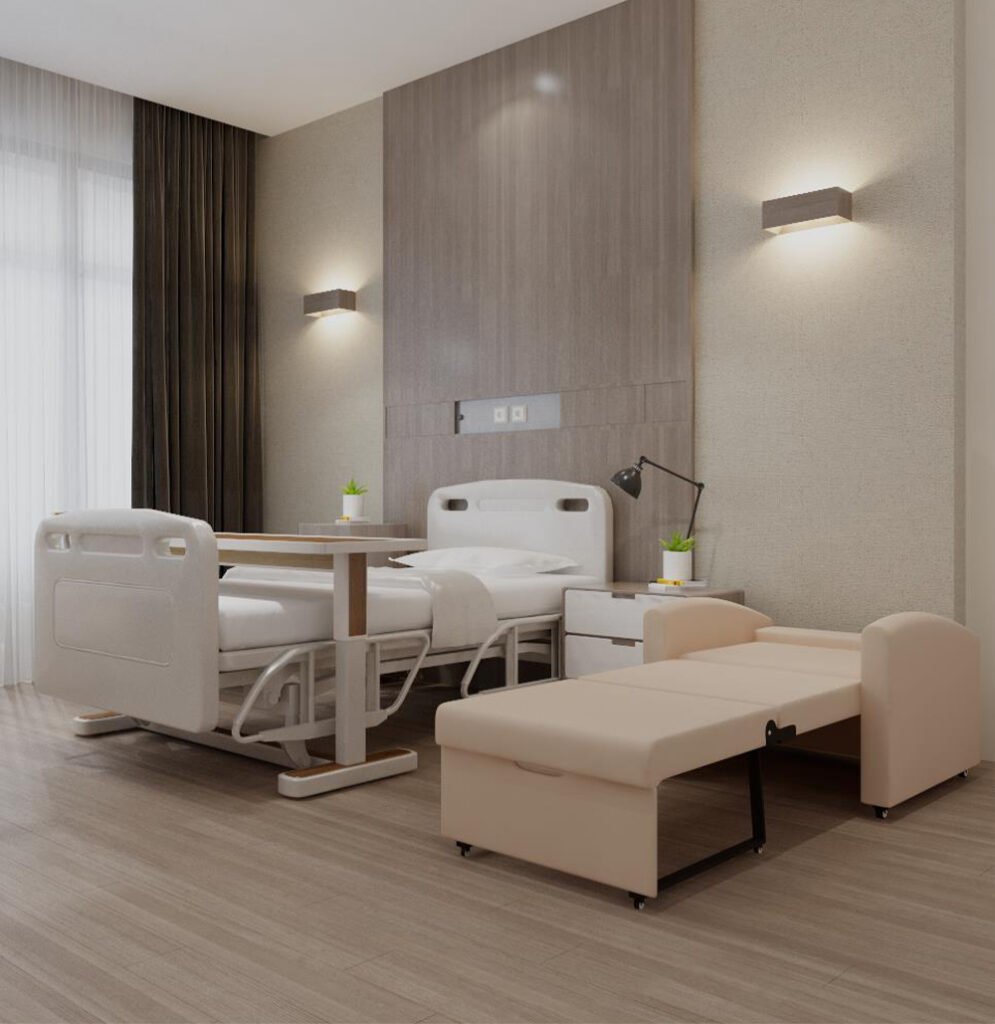
Projects like St. Paul’s Hospital show how custom-fitted ward furniture maximises limited ICU and inpatient-room space.

Production Capacity and Project Experience
Production capacity and project execution experience are equally vital. Large-scale hospital renovation orders require strict delivery timelines.
Experienced manufacturers have completed multi-million-dollar medical-build projects, understanding hospital-site working rules including:
Noise control during installation
Infection-safe installation procedures
Phased delivery for live hospital environments
Ask potential suppliers for reference cases of comparable-size hospital builds. Cross-reference industry insights shared by healthcare design blogs for hospital procurement best practices.
After-Sales Support
After-sales support is frequently underestimated during tender evaluation. Hospital patient room furniture faces heavy, 24-hour usage. Spare-part availability, on-site repair response, and multi-year warranty agreements are non-negotiable.
Many overseas hospital buyers prefer manufacturers offering one-stop full-range medical furniture, covering ward furniture, nurse stations, and public-area seating.
Conclusion
When you shortlist a hospital patient room furniture manufacturer, focus on:
✅ Medical-grade compliance – Third-party tested materials
✅ Custom-build competence – Tailored to your project
✅ Proven large-project track-records – Real-world experience
✅ Comprehensive after-sales service – Long-term reliability
Making informed supplier selections prevents costly rework and supports safe, comfortable healing environments for decades ahead.
Contact us today to learn more about Hospital Bedroom Furniture: https://hospital-furnitures.com/product-category/hospital-bed/