
Hospital waiting area chairs are high-traffic workhorses inside outpatient lobbies, emergency triage zones, and hospital public spaces. Too many facilities select low-cost seating only to face rapid damage, hard-to-sanitise surfaces, and poor patient comfort.
Smart procurement of hospital waiting area chairs balances infection safety, ergonomic comfort, mechanical durability, and visual harmony with the rest of your hospital interior design.
Infection Control: The Top Priority
Infection control tops the priority list for medical waiting-room seating. In busy OPD lobbies, chairs receive constant contact from patients, the elderly, and visitors.
Premium hospital waiting area chairs adopt:
Non-porous, disinfectant-compatible upholstery
Sealed frame structures without hidden gaps where germs accumulate
Medical-grade vinyl passing Wyzenbeek abrasion testing is the preferred upholstery option for heavy-use healthcare settings. Avoid fabric upholstery that absorbs bodily fluids and cannot withstand frequent deep sanitisation.
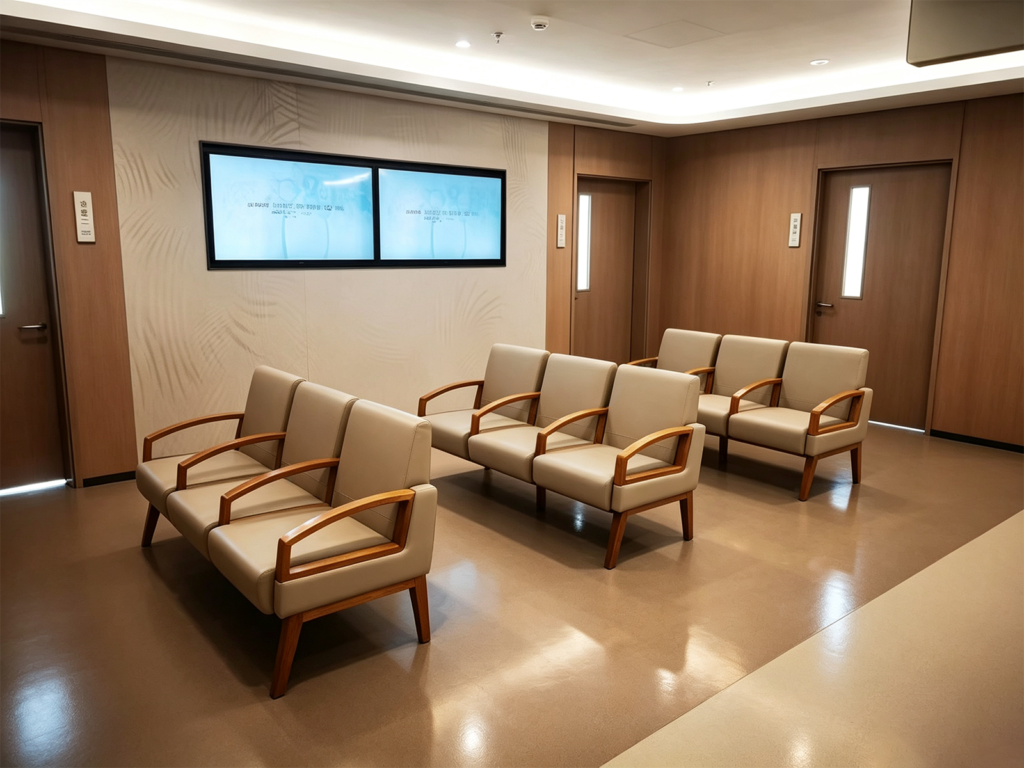
Structural Durability and Accessibility
Structural durability and accessibility are next-level buying considerations.
Link-connected beam-frame waiting chairs remain the mainstream choice for hospital lobbies. Key features include:
Heavy-duty powder-coated steel frames – Resists rust, impact, and long-term wear
Wider seat options – Accommodates bariatric patients
Appropriate seat height – Supports elderly visitors with limited mobility
Smooth armrests – Assists people transferring from wheelchairs
Modular designs allow facility managers to add or reduce seating units according to fluctuating patient volumes in outpatient departments.
Aesthetics: A Surprising Role in Patient Wellbeing
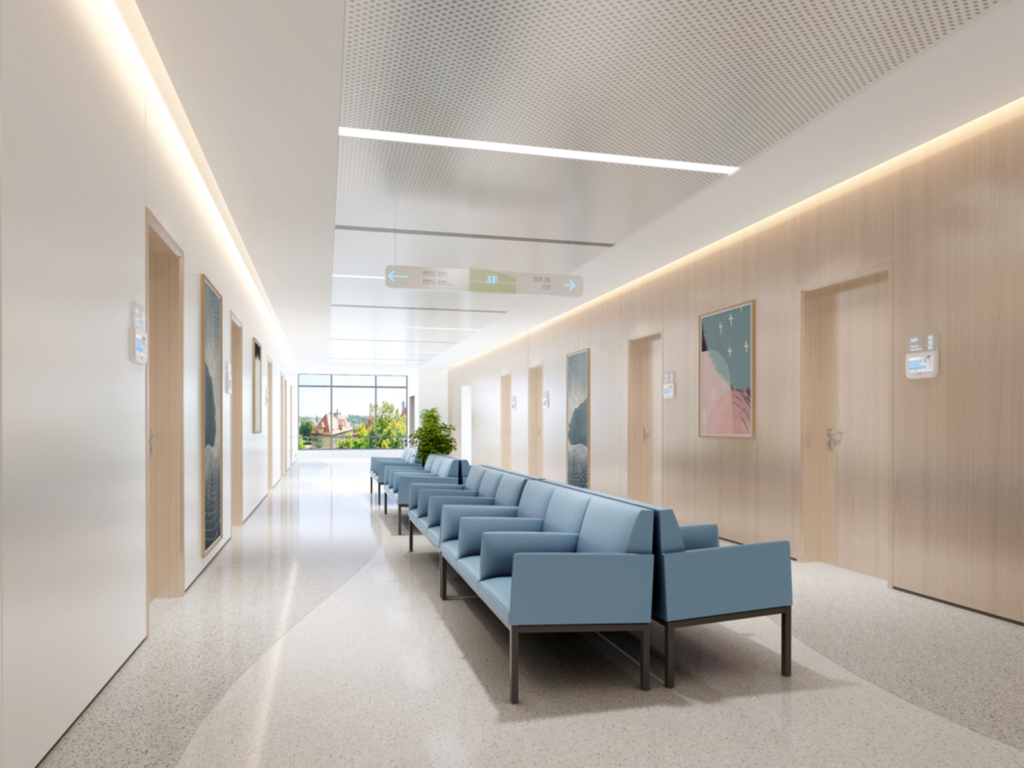
Aesthetics play a surprisingly large role in patient mental wellbeing. Old-fashioned all-silver steel seating creates cold, intimidating clinical feelings.
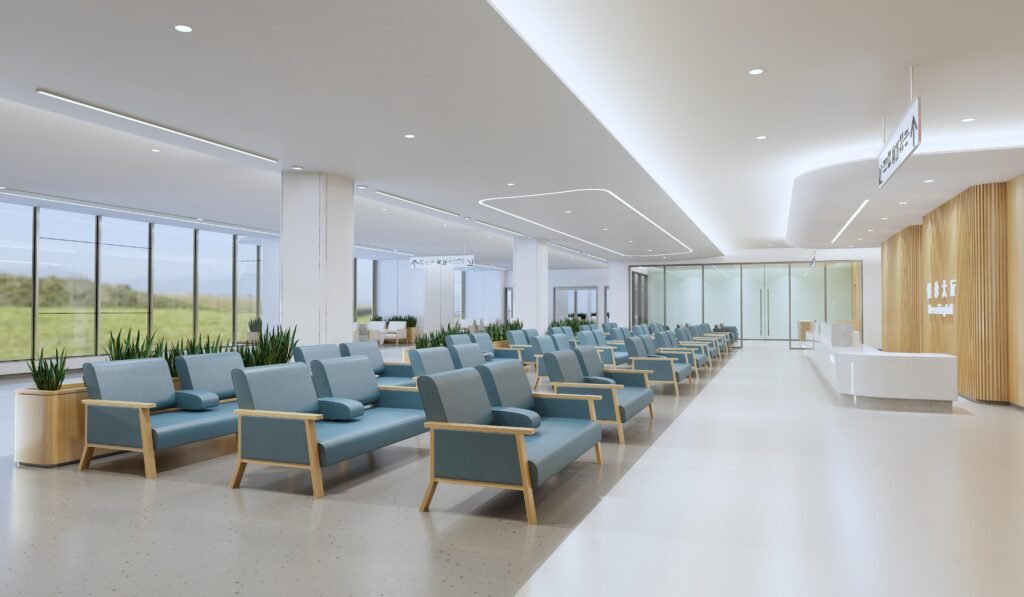
Today’s leading projects—such as St. Paul’s Hospital—integrate waiting area chairs with:
Soft neutral upholstery
Wood-grain side panels
Matching colour tones with hospital reception counters
Plants and curated wall art complement chair arrangements to lower patient anxiety in long-wait OPD zones.
Coordinated Procurement Strategy
When planning hospital furnishing budgets, treat waiting-area seating as part of your complete medical-furniture package. Many buyers combine lobby seating orders with hospital patient room furniture, sourcing from one qualified manufacturer to:
Simplify project management
Align quality standards
Control total costs
According to industry research, holistic medical interior design improves patient satisfaction scores significantly compared with piece-by-piece random purchasing.
Pre-Purchase Verification
Before confirming large orders, always:
✅ Request physical material samples and load-test reports
✅ Inspect seam sealing, frame thickness, and upholstery quality
✅ Review past hospital reference projects from your supplier
Never judge purely by product photos. Verify real-world performance through documented case studies.
Conclusion
Hospital waiting area chairs are not simple commodity seating. They are mission-critical medical-environment furniture.
Prioritise:
✅ Infection-safe materials
✅ Accessibility for all patient types
✅ Heavy-use durability
✅ Design consistency with your overall hospital interior
Making thoughtful seating investments delivers better patient experience and reduces long-term replacement expenditure for healthcare institutions.
Website: https://hospital-furnitures.com/product-category/chair-series/hospital-waiting-chairs/