
Kuwait Children’s Hospital, located in Kuwait City, is on track to become the largest children’s hospital in the world, spanning 595,000 square meters with a capacity of 792 beds. Designed by global architecture firm HKS in association with SSH Design and engineering firm WSP, the facility represents the first consolidated pediatric care model in the Middle East. The project features 30 operating theatres, a 99-bed ICU, and more than 11,000 rooms—all designed to deliver a welcoming, stress-free, and home-like environment for patients and families.
This landmark healthcare development, delivered on a design-award-construct basis by Kuwait’s Ministry of Health and Ministry of Public Works, sets a new benchmark for medical infrastructure in the region
Hospital Furniture Solutions for a Mega-Scale Pediatric Facility
For a hospital of this scale, hospital furniture solutions must address far more than aesthetics. Every furniture specification—from hospital waiting chairs in the expansive public atrium to hospital bed units in patient rooms—must support infection control, patient comfort, and staff efficiency across thousands of daily touchpoints.
The 375-meter-long enclosed atrium alone requires extensive public seating, with play areas themed around a “sea adventure” concept. This means waiting area furniture must balance durability, hygiene, and child-friendly design. Meanwhile, patient bedrooms are designed to accommodate family members staying overnight, driving demand for foldable accompany chairs and multi-functional caregiver seating.
Key furniture categories required for large pediatric hospital projects include:
Hospital waiting chairs with antimicrobial, easy-clean upholstery
Patient beds with adjustable safety features and ergonomic controls
Infusion chairs designed for pediatric oncology and day-treatment units
Reception counters and nurse stations for high-traffic clinical zones
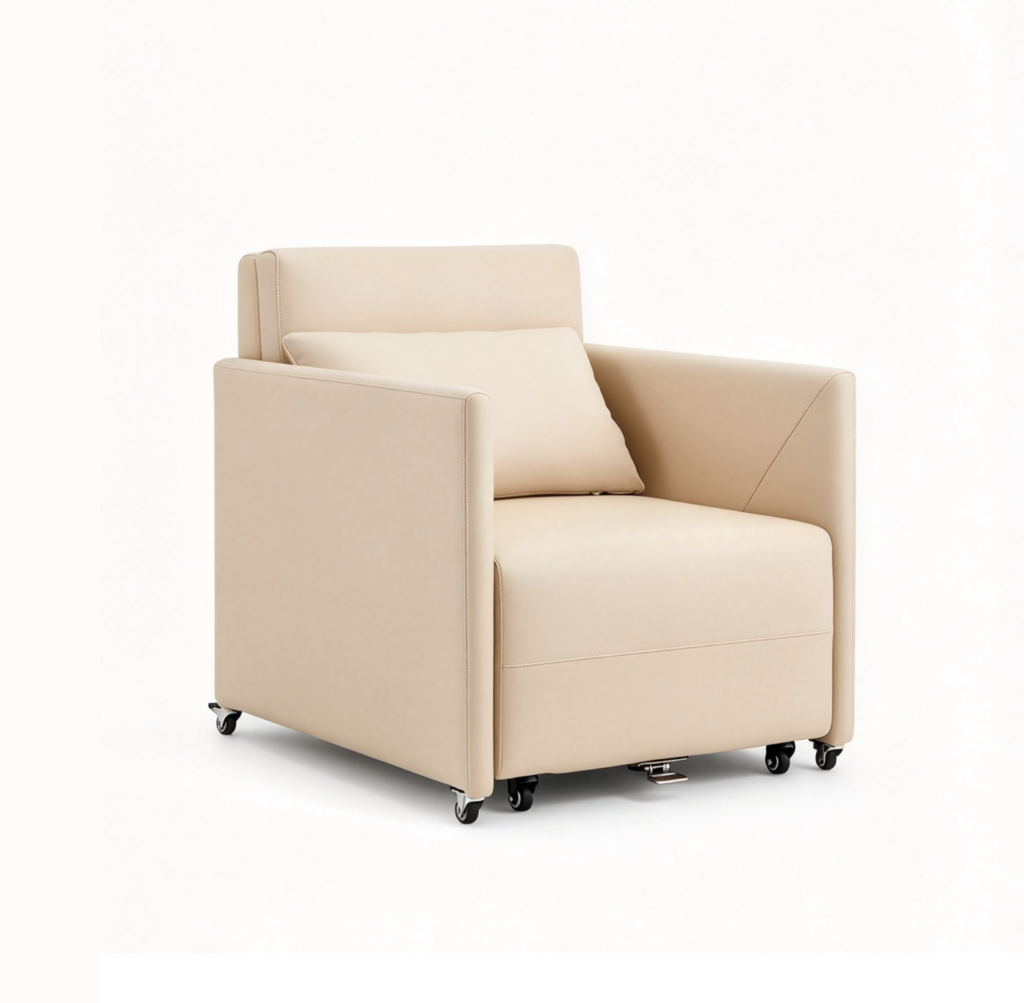
Foldable accompany chairs for family overnight stays
Selecting a Hospital Furniture Manufacturer for Large-Scale Projects
When evaluating a hospital furniture manufacturer for mega-projects like Kuwait Children’s Hospital, procurement teams should verify several critical factors:
1. Proven Large-Project References
Manufacturers must demonstrate experience with high-volume medical furniture orders, preferably for hospital builds of comparable scale.
2. Medical-Grade Compliance
Furniture must meet healthcare hygiene standards, including resistance to repeated disinfection and compliance with international medical furniture guidelines.
3. Customization Capability
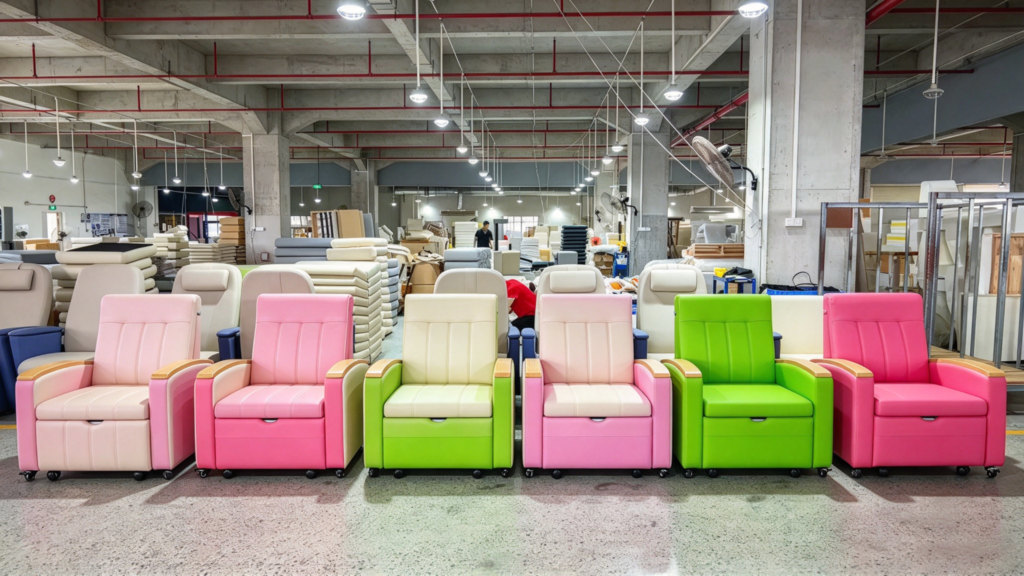
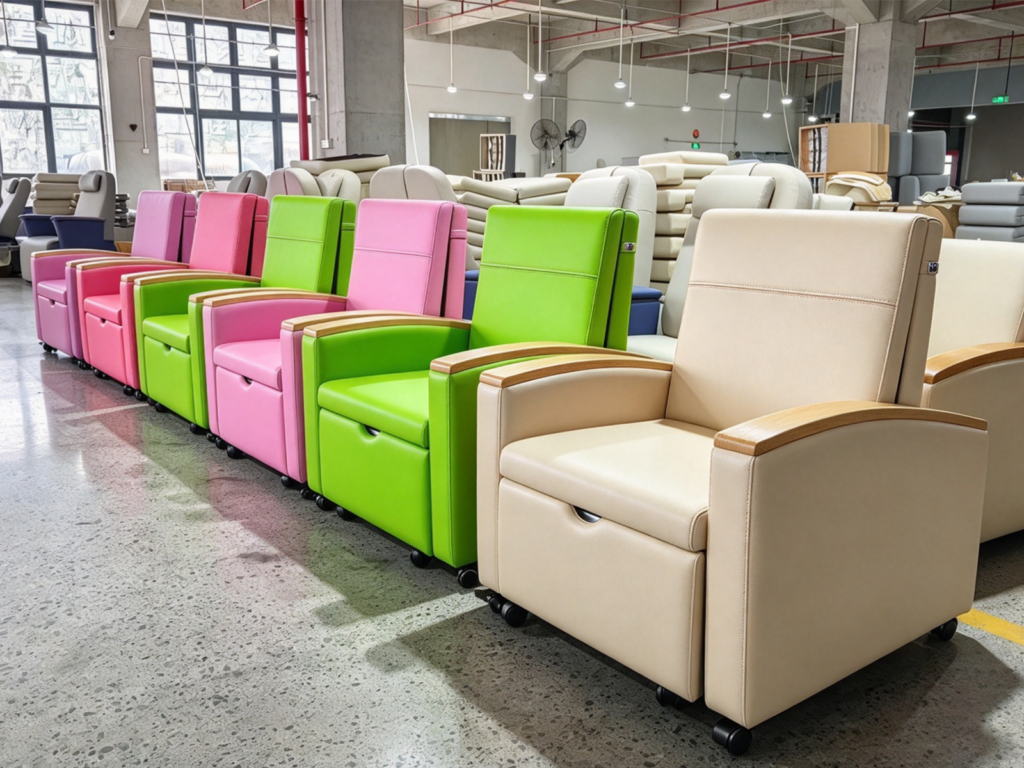
Large pediatric hospitals require tailored solutions—from custom dimensions for unique room geometries to color schemes aligned with healing environments.
4. Export and Logistics Capacity
International projects demand reliable production timelines, complete export documentation, and coordinated shipping to meet construction schedules.
For more insights on public-area seating, explore our guide on hospital waiting chairs. For inpatient zones, read our detailed article on hospital patient room furniture.
Global Standards in Healthcare Furniture Procurement
Large-scale healthcare projects increasingly reference international best practices. Resources from NHS Supply Chain highlight the importance of testing furniture against repeated disinfection, heavy-use loading, and accessibility requirements. The WHO healthcare facility guidance provides additional benchmarks for designing patient-safe environments.
For construction and design professionals, the HKS project page for Kuwait Children’s Hospital offers valuable insight into the architectural vision behind this landmark facility—from crystalline design forms to sea-themed wayfinding that turns the patient journey into an engaging experience
Delivering Complete Hospital Furniture Projects
Projects of this magnitude require a hospital furniture manufacturer capable of full-scope project delivery: from initial consultation and sample confirmation to bulk production, quality control, and export logistics. Whether supplying hospital waiting chairs for atrium lobbies, hospital bed systems for patient wards, or infusion seating for pediatric treatment bays, reliable manufacturers ensure consistent quality across every product category.
Investing in medical-grade furniture early in the procurement phase reduces long-term maintenance costs and elevates patient satisfaction—a critical metric for pediatric facilities where comfort and distraction directly impact healing.
Conclusion
Kuwait Children’s Hospital represents the future of pediatric healthcare infrastructure. For hospital project contractors and procurement teams, selecting the right hospital furniture solutions partner is essential to delivering safe, comfortable, and efficient medical environments at scale.
📩 Contact us today to discuss your hospital furniture project requirements and receive a tailored quotation.